Leading Without Ego: How Founders Grow Into Mature Leadership
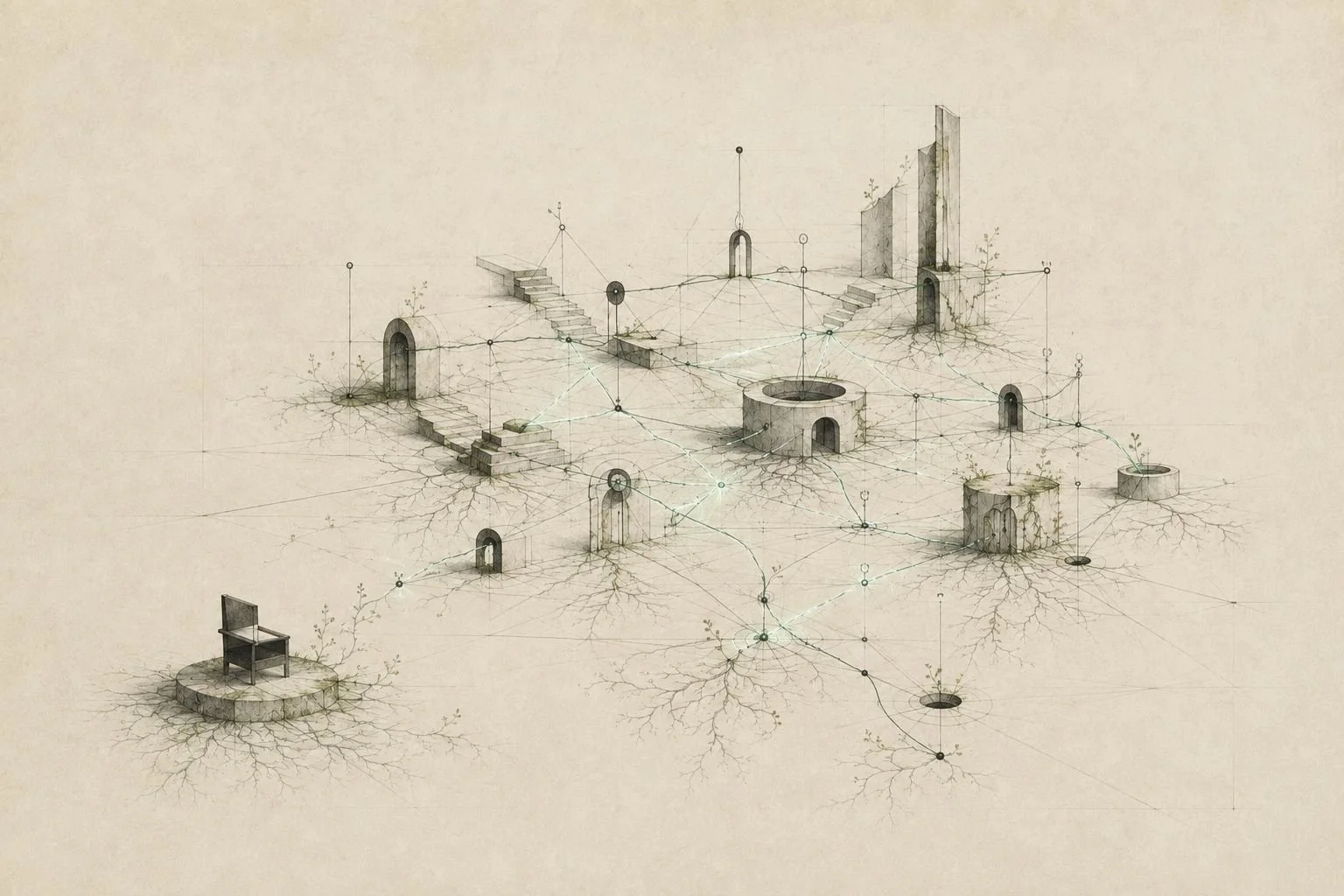
There is a founder who enters the room at the end of the line of people streaming in.
The founder takes the remaining chair, opens a notebook, and prepares to listen. Someone standing near a screen starts explaining why a project has failed. Years earlier, they might have interrupted. They would have recognized the problem before the person speaking had finished describing it. They would have explained where the reasoning went wrong, reminded the room of the original strategy, and taken control before uncertainty could spread.
They would have called this leadership, then. Perhaps, at the time, it was.
Leading without ego does not mean becoming passive, selfless, or uncertain. It means separating the needs of the business from the leader’s need to be right, necessary, admired, or obeyed. For founders, this is not a single act of surrender. It is the long developmental work of allowing an organization to acquire intelligence, authority, and identity beyond the person who began it.
A young company often needs someone willing to move before consensus arrives. The founder sees what does not yet exist and persuades other people to help construct it. They make decisions with insufficient information. They assume responsibility before the institution has developed enough structure to hold it. The ego can be useful here. It protects an unfinished idea from premature democracy. It gives the founder enough conviction to continue when the evidence remains partial, the money is uncertain, and nearly everyone sensible has declined to participate.
Without some unusual relationship to self-belief, many businesses would never begin. My bias is this: many of the best businesses would never have begun if ease were the standard. The easier a company is to start, the easier it is to mistake a bad idea for a viable one.
The difficulty is that the quality required to begin a company is not always the quality required to mature one. The founder who once had to believe, I can see what others cannot, may eventually need to learn: what I can see alone is no longer enough.
That education rarely happens in an afternoon.
Why Ego Death Does Not Produce Ego-Less Leadership
We live in a period fascinated by transformation.
A person leaves for a weekend and returns with a new vocabulary. They have dissolved the self. Encountered the universe. Understood that everything is connected. They speak more slowly for several weeks.
This is usually sincere. A psychedelic experience can interrupt the ordinary boundaries of identity. It may allow someone to witness the self as smaller, stranger, and less permanent than it previously appeared. Still, seeing beyond the ego is not the same as learning to lead without organizing everything around it.
The ego can disappear in the forest and return on Monday morning with voting rights. It can describe interconnection while interrupting an employee. It can speak of surrender while retaining control of every consequential decision. It can announce that hierarchy is an illusion while continuing to receive the largest share of the value.
An experience may reveal that the self is not the center of existence. A life must teach us how to behave once we know. The founder in this essay has not transcended the ego. They have spent decades becoming less governed by it. There was no single revelation. There were many meetings.
How a Founder Becomes the Company’s First Organ
In the beginning, the founder is often the first organ of the business.
They are its memory, imagination, sales department, nervous system, and emergency response. Information passes through them because there is nowhere else for it to go.
The company learns their rhythm.
What they notice becomes important. What they ignore becomes difficult to discuss. Their anxieties become deadlines. Their preferences become culture. Their unresolved needs acquire job descriptions. This does not necessarily happen because the founder is unusually narcissistic. It happens because organizations grow around available structures. A vine climbs whatever is nearest.
When one person holds the vision, relationships, capital, history, and authority, the company naturally bends toward that person. What begins as practical dependence can slowly become an ontology: The founder knows. The founder decides. The founder saves. The founder is the business.
Eventually, the company may become large enough to require more than one intelligence while remaining psychologically organized around one self. This is where leadership begins to change. The founder must stop asking only whether the organization still needs them. They must ask what the organization has been prevented from becoming because it needs them too much.
How Founders Begin to Relinquish Control
Every mature founder has a first humiliation. Not embarrassment. Humiliation in its older sense: being returned to the ground.
A product fails after they insisted it was ready. A trusted client leaves and explains why. An employee’s job is harmed by a decision that appeared elegant inside the boardroom. The culture begins producing behaviors the founder claims not to value, although everyone else can trace those behaviors directly back to what the founder rewards.
Perhaps the business succeeds. This may be the more dangerous humiliation because success can protect a leader from the information failure would have delivered immediately. Revenue can make an immature decision look wise. Growth can conceal relational damage. Authority can transform disagreement into silence, then misinterpret the silence as alignment. Charisma can make avoidance look like leadership.
For a while, the founder can outrun the lesson. The business cannot. The consequences enter elsewhere: employee turnover, confused strategy, brittle succession, exhausted partners, customers who feel the difference before the dashboard records it, saying yes to the wrong contracts because it’s quick money. Eventually, something refuses to remain invisible. The founder must choose. They can protect the identity of being right. Or they can protect the business from the cost of needing them to be right. This is one of the private thresholds of leadership.
No applause accompanies it. Usually, the opposite. A leader may be blamed. They may lose relationships, standing, or respect they did not deserve to lose. The wrong decision is often made to look more attractive than the responsible one: faster, cleaner, more profitable, less disruptive. This is why integrity cannot be reduced to a single courageous act. It must survive the consequences of being practiced again.
The Difference Between Leadership Confidence and Ego
Leading without ego does not mean becoming vague, passive, or endlessly agreeable.
It does not require a leader to pretend not to know what they know.
It does not mean distributing every decision equally, withholding judgment, or asking a committee to determine whether the building is on fire.
Humility is sometimes confused with the performance of uncertainty. A leader softens every statement, apologizes for occupying authority, and makes their discernment difficult to locate. That is not necessarily ego-less leadership. Sometimes it is ego wearing the costume of harmlessness.
A mature leader can say: This is the direction. This decision is mine. I was wrong. You understand this better than I do. We will not proceed. What can we learn from this mistake?
The clarity remains. What changes is the leader’s relationship to being the source of clarity.
Confidence says: I can act without possessing complete certainty.
Ego says: My position requires other people to experience my certainty as truth.
One serves movement. The other requires an audience.
The Company Must Survive Being Disappointed in You
Early in a company’s life, people may need to believe in the founder.
Later, they need to be able to disagree with them.
This transition is difficult because admiration can feel like trust. They are not the same.
Admiration looks upward.
Trust moves in every direction.
A company organized around admiration becomes skilled at anticipating the founder’s preferences. People learn which information creates enthusiasm, which concerns cause irritation, and which truths should be translated into more acceptable language before traveling upward.
The founder may say they want honesty. The organization studies what honesty costs. Leading without ego requires building a company capable of disappointing you. Maybe the company needs to be small to be healthy for everyone, including the founder.
Someone must be able to say that the founder’s favorite idea is weakening the work. Someone must be able to question the story the company tells about itself. Someone must be able to identify the distance between the leader’s stated values and the conditions experienced by those with less power.
The test is not whether the founder allows the sentence to be spoken. The test is what happens to the person after they speak it. Do they remain trusted? Are they included in the next consequential conversation? Does their honesty become evidence of leadership, or a private mark against their loyalty?
Organizational ego reveals itself in the truths a company technically permits but socially punishes.
If the company is effectively one person—the founder—then that founder needs advisors willing to ask the questions no one else will. Why? Because the future depends on what the present is willing to confront.
The Slow Removal of the Throne
There is rarely a dramatic moment when a founder becomes less central. The throne is removed piece-by-piece. A decision is made without them. A relationship continues without their mediation. Someone else tells the company’s story accurately. A problem is solved through a method they would not have chosen. The work improves without resembling them. The company downsize’s to a healthy size for everyone, including the founder.
At first, this can feel like disappearance. Founders are often told to make themselves replaceable, as though replaceability were an operational achievement. Psychologically, it is closer to grief. The company contains years of their life. It may have converted their private imagination into payroll, debt, lease agreements, language, daily habits, and public consequence. To become less necessary inside it can feel like being slowly edited out of one’s own autobiography.
A leader may interfere not because intervention is required, but because involvement reassures them that they still exist. This is why succession cannot be solved only through governance documents. The founder must develop an identity capable of surviving the company’s independence.
Without that inner work, authority is formally transferred and informally reclaimed. The old leader remains nearby, casting a weather system over every decision. No one knows whether they are truly free to lead or merely being observed during a temporary experiment. Leading without ego means allowing the work to become illegible to the self that began it. Not abandoned. Alive enough to change.
How Leadership Matures Over Time
Time does not automatically make a person wise. Some leaders repeat the same year for thirty years and call it experience.
Still, decades provide a form of evidence unavailable to revelation. They show which victories became liabilities. They reveal which dismissed concerns were early warnings. They allow a person to watch their strongest qualities produce unintended harm when used beyond their proper season.
A younger leader often asks, How can I become more powerful?
Soon enough, courage becomes domination. Discernment becomes certainty. Loyalty becomes protection from accountability. Persistence becomes an inability to release what has ended. Vision becomes exemption from reality.
Then, power and money change the information that reaches a person. People laugh sooner. Objections become softer. Bad news arrives later. Ordinary preferences are interpreted as strategic direction. The narratives are managed by a PR team.
A mature leader, however, asks, Where has my power made reality harder to perceive?
The ego-less leader does not imagine they have escaped distortion. They build practices that account for it. They ask again. They wait after speaking. They separate disagreement from disloyalty. They notice who becomes quiet when they enter the room. They pay attention when every proposal resembles something they already believe. They understand that their presence changes the experiment.
Practices That Reduce a Founder’s Centrality
An organization does not become less dependent on its founder because the founder announces that other people are empowered. It becomes less dependent through structures that remain intact when pressure rises.
Decision rights must be clear enough that authority does not quietly return to the founder whenever the stakes become consequential. Feedback must be able to travel upward without becoming a test of loyalty. Meetings need room for the founder to speak last, after other interpretations have had time to form. Organizational memory must live somewhere other than one person’s recollection. Successors must be permitted to exercise authority without wondering whether every unfamiliar choice will be informally reversed.
These practices are not techniques for making the founder disappear. They are ways of allowing intelligence to exist beyond proximity to power. A company becomes more mature when disagreement can improve the work, when important relationships can survive without the founder’s mediation, and when organizational health is measured by more than the approval of the person who began it.
The test arrives under strain. Many leaders distribute authority while conditions are calm and reclaim it when uncertainty appears. The organization learns from the reclamation, not the announcement. If responsibility is given without the right to make consequential decisions, dependence has only acquired a more generous vocabulary.
What Leading Without Ego Looks Like
The founder is still sitting in the meeting. The project has failed. There will be consequences: financial, operational, perhaps relational. Leading without ego does not make those consequences disappear. The person presenting finishes. The room waits. The founder asks a question. Not the disguised accusation they once would have delivered. Not the question whose purpose is to demonstrate that they already know the answer.
They ask what the team understands now that it could not understand before the failure. Someone answers.
Another person adds something the founder had not noticed.
The conversation moves around the room rather than continually returning to its most powerful person.
The founder writes something down. This appears an inconsequential act. Most of maturity does.
We prefer transformation to arrive through visible drama: the mountain, the medicine, the collapse, the conversion, the phoenix. Sometimes transformation does arrive this way, and it is good. There are other ways.
In society — and even in the therapy room — I notice how often we expect the self to break open once and remain open. Life is less ceremony and more ritual, both are sacred. Life’s transformations are measured through repetition, not revelation.
The ego returns each morning. It appears in the desire to be credited, obeyed, protected, exceptional, and remembered — particularly when we are tired or operating from the less healthy parts of ourselves. It appears in our irritation when others move too slowly, and in our discomfort when they no longer require our speed.
Sometimes, having less energy as we age helps. The ego may return each morning, but we no longer have the stamina to obey its every demand.
The work is not to kill the ego. The ego gives us identity, ambition, and the instinct to protect what matters. The work is to recognize its value without granting it unilateral authority. Again. Then again.
We admire honest leaders because honesty requires discomfort and, often, loneliness. At times, it asks a person to relinquish their own advancement because the larger purpose matters more than being rewarded by the system. They see how to win the game and decide that winning it would diminish the work.
Mature Leadership Is Not Selflessness
A business does not need a leader without a self. It needs a leader whose self has become large enough to stop demanding the center. True leaders know their worth. They understand what honesty means, including self-honesty. This leader still possesses taste, conviction, memory, desire, and judgment. They may be unusually strong in their sense of direction, because they may see a direction before others can see it. They may stand in the crow’s nest of society’s voyage toward the future.
What has changed is the boundary around their importance. They understand that being responsible for the whole does not mean becoming the whole. They know that the company’s purpose is not to confirm their identity. They can receive information that alters the story they tell about themselves. They can let another person’s intelligence remain distinct rather than absorbing it as evidence of their own leadership. They can build something that eventually belongs to more lives than theirs.
Leading without ego does not happen because the founder encounters a reality beyond the self. It happens because reality keeps arriving. Through the employee who leaves. The strategy that fails. The apology that cannot repair everything. The successor who leads differently. The community that must live with what the company has made. The decades do not remove the founder from the story. They change the founder’s place within it.
Perhaps this is what mature leadership finally becomes: not the disappearance of power, ambition, or identity, but a quieter arrangement among them with their eyes on the horizon. The founder no longer stands above the business, issuing meaning. They become one participant inside a living system they helped begin and will not be permitted to finish, because the founder wants the company to live beyond them.
Perhaps the greatest gift a company can give its founder is an intern speaking freely in a meeting, unaware of who they are.
The company continues speaking. The founder enjoys not being the answer most of the time, and they believe in what the work is doing more than ever.
Further Reading
Yvon Chouinard’s Let My People Go Surfing offers one account of a founder learning to build a company around principles larger than conventional management. It is most useful here not as a portrait of a flawless leader, but as evidence that an organization’s philosophy is formed through years of decisions, contradictions, experiments, and corrections — not one transcendent moment, or person.