
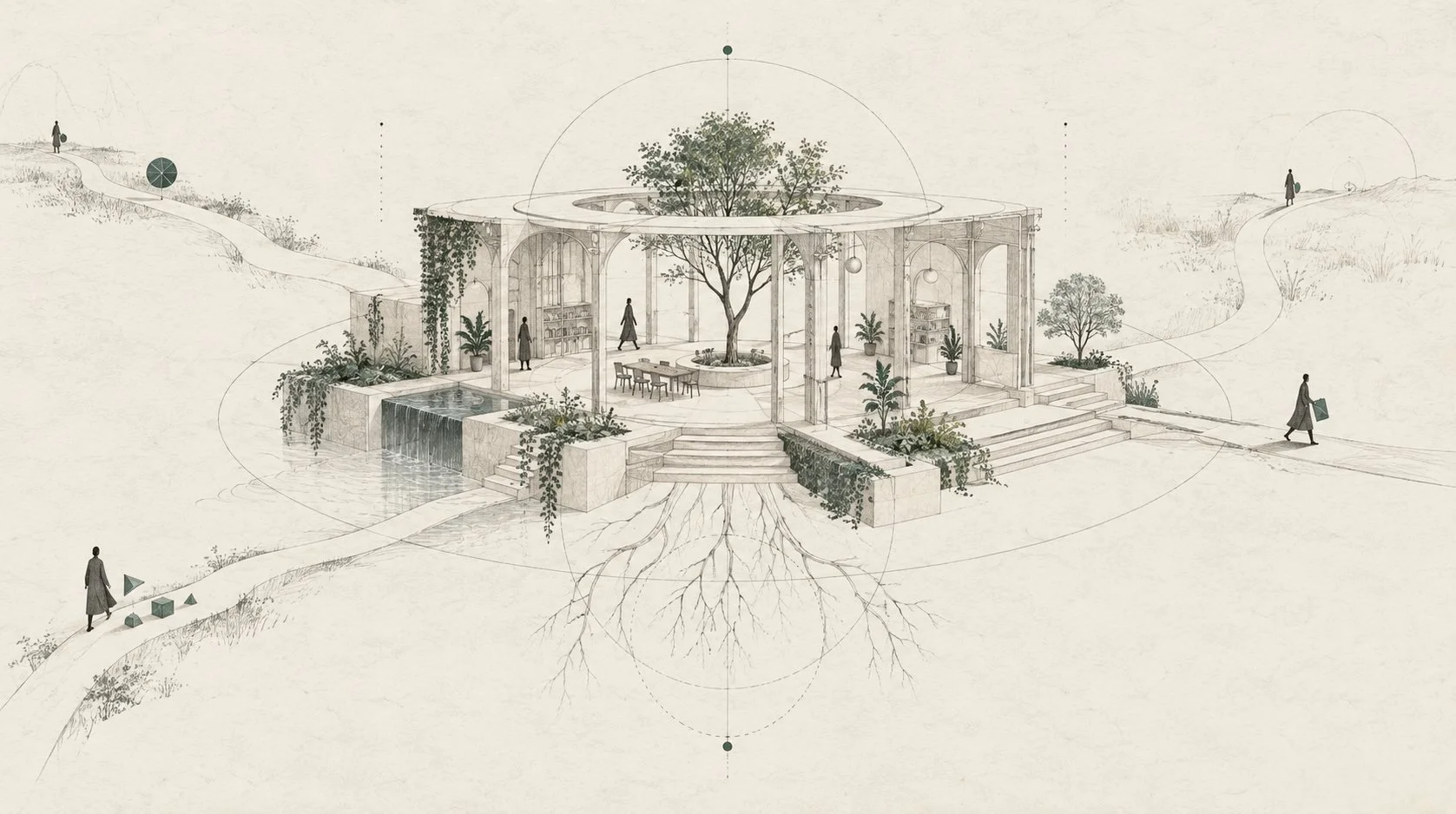
Integrity Is Not a Labor Strategy
After ten years of trying to build a humane workplace in mental health, I no longer believe good leadership guarantees reciprocity. This essay explores what integrity can — and cannot — do inside a culture that increasingly treats work as transaction.
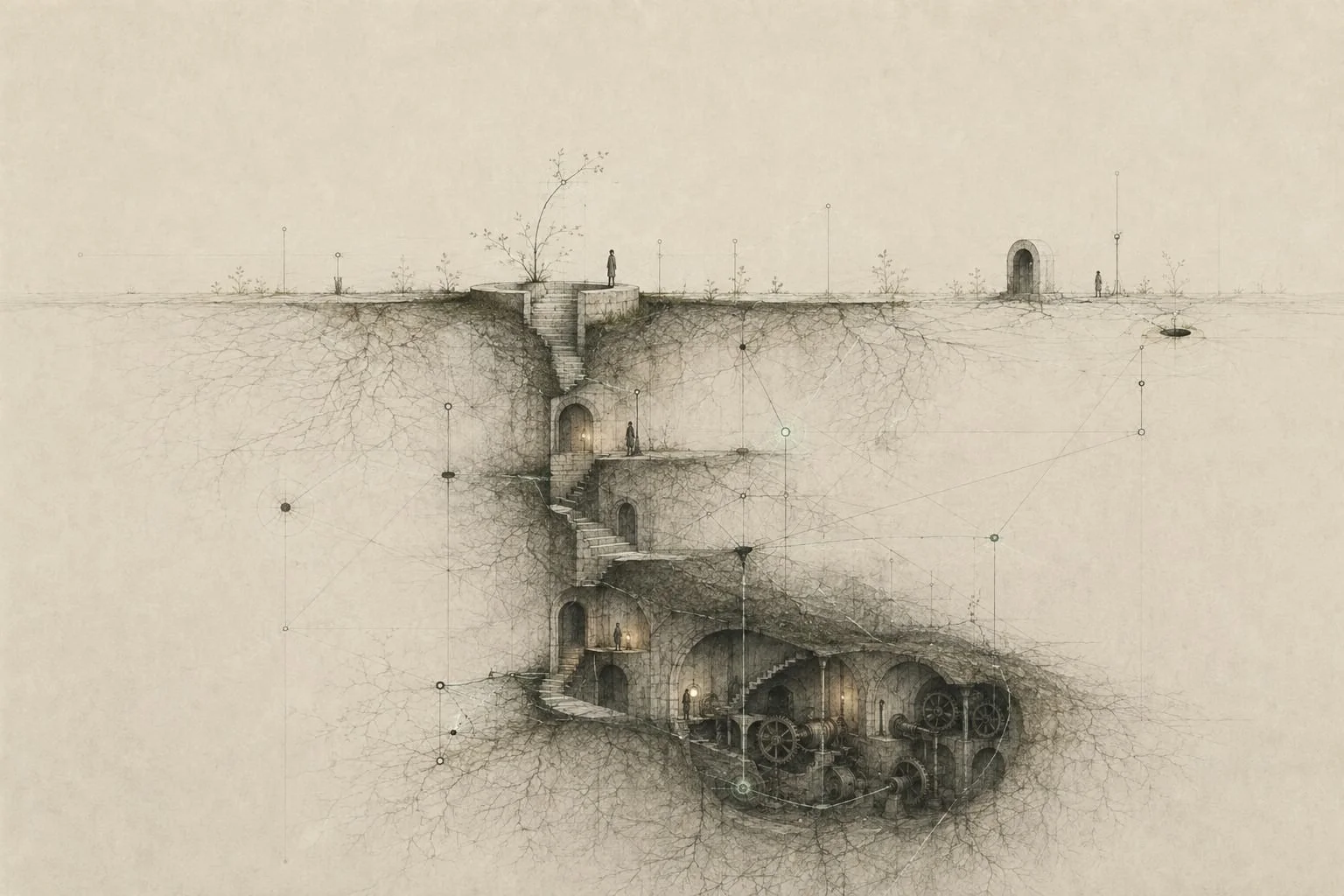
Nineteen Years Underground
For nineteen years, Saturn in the eighth house became a language for descent: loss, power, erasure, endurance, and the machinery beneath apparently stable systems. What emerged was not a belief that suffering makes us better, but a harder form of sight—the ability to distinguish what was mine from what was structural.
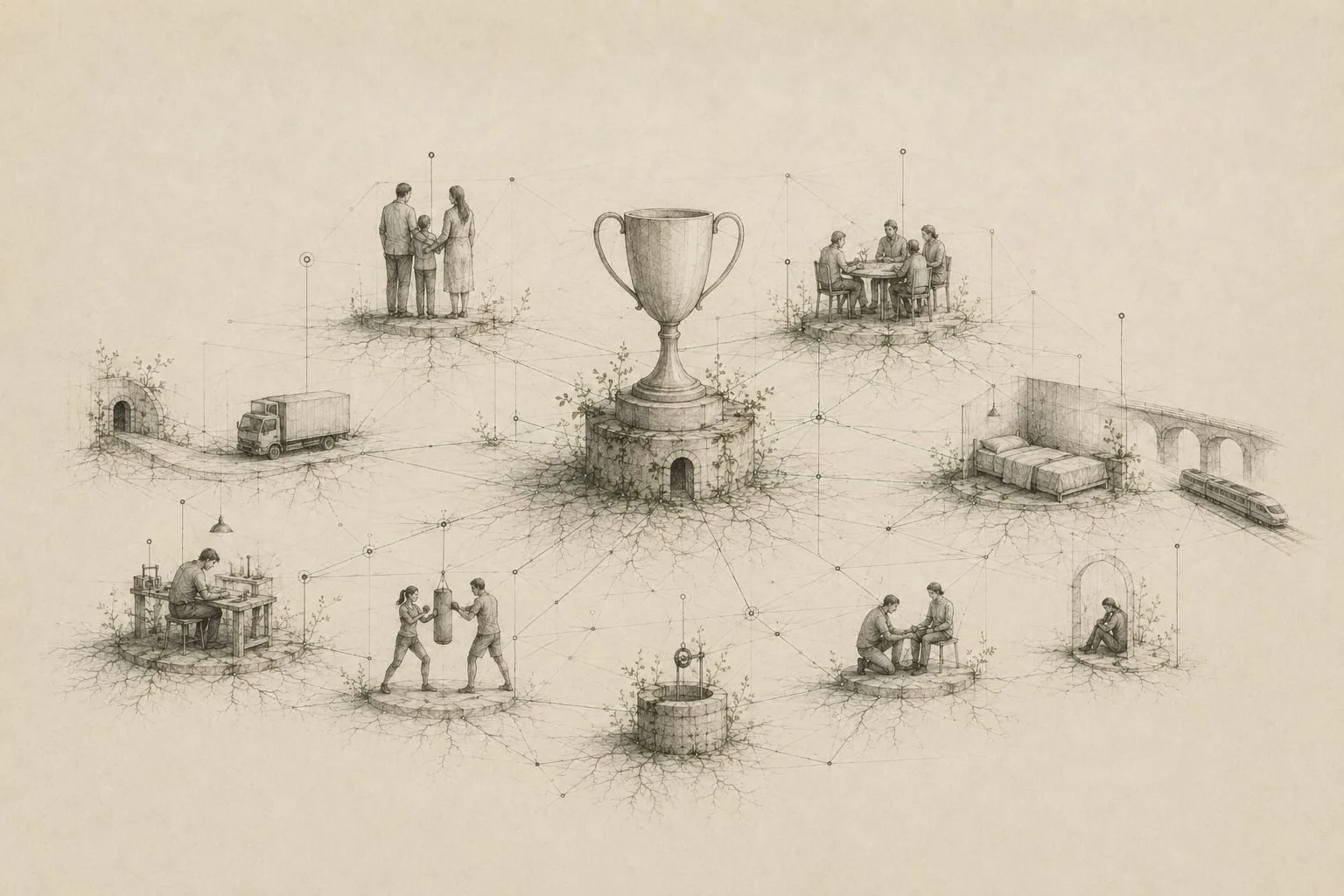
The Trophy Has One Name
The trophy has one name, but the achievement rarely does. Behind exceptional performance is an invisible organism of family, sacrifice, resources, recovery, and support. We study elite performers while ignoring the ecology that makes their performance repeatable.
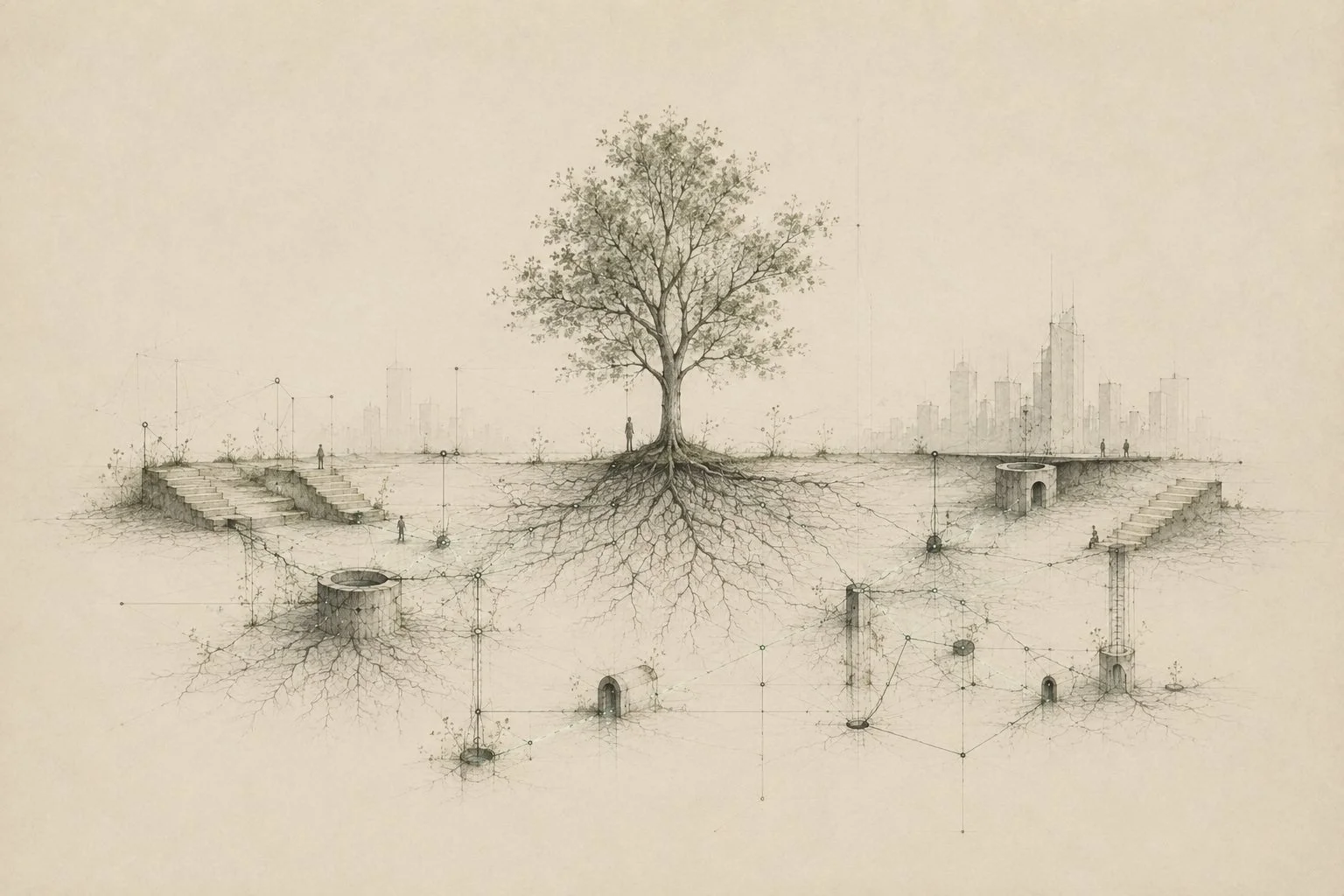
Conditions
We are taught a simple moral equation: work hard, be good, and eventually life will reward you. Reality has made no such agreement. If character cannot fully explain why people flourish or fail, we have to look elsewhere—to the conditions in which a life is asked to grow.
Leading Without Ego: How Founders Grow Into Mature Leadership
The qualities that help a founder begin a company can eventually prevent it from maturing. This Work Ecology essay explores the slow work of leading without ego: receiving disagreement, relinquishing centrality, and building an organization capable of intelligence beyond the person who began it.

The Intimate Partner of Business Is Time
Business is often described as being in relationship with money, but its most intimate partner is time. Through Hard Times, family history, industrial pottery, and a Japanese teapot, this essay examines how work learned to measure, discipline, and dominate human time — and what it might mean for business to witness time instead.
Work Is Not a Meritocracy. It Is an Ecology.
The most naïve thing I ever believed about work was that it was based on meritocracy. But merit does not exist outside ecology, access, power, and recognition.